
How to Choose a Reliable Auto Shop for Your Next Car Service
For many vehicle owners, finding a trustworthy auto repair shop ranks right alongside finding a good doctor or a reliable contractor. Your car is likely one of your largest financial investments, and you depend on it daily to get you to work, transport your family, and run essential errands. When it breaks down or requires routine maintenance, handing the keys over to a stranger can cause significant anxiety.
The automotive repair industry is built on trust, yet many drivers feel vulnerable due to a lack of technical knowledge. This gap can lead to fears of overpaying, receiving subpar work, or being pressured into unnecessary repairs. Fortunately, selecting a reputable mechanics shop does not have to be a guessing game. By taking a systematic approach and knowing what indicators to look for, you can locate a service center that offers fair pricing, exceptional craftsmanship, and honest customer service.
1. Start Your Search Before an Emergency Occurs
The worst time to look for a mechanic is when your car is sitting on the side of the highway with steam pouring out from under the hood. When you are stranded, panic takes over, and you are far more likely to choose the nearest shop or the first tow truck destination regardless of their reputation or pricing.
Instead, look for a service center when your vehicle is running perfectly. Use minor routine maintenance tasks like oil changes, tire rotations, or windshield wiper replacements to test out a new shop. This allows you to experience their customer service, evaluate their communication style, and inspect their facilities firsthand without the pressure of a major, costly repair hanging over your head.
2. Verify Professional Certifications
A reliable auto repair shop should be proud to display its credentials. The automotive industry has established rigorous benchmarks to ensure technicians possess the skills required to work on modern, highly complex vehicles.
-
ASE Certification: Look for the blue seal of the National Institute for Automotive Service Excellence. Technicians must pass demanding exams and demonstrate relevant work experience to earn this credential. A shop that employs ASE-Certified or Master-Certified technicians demonstrates a commitment to professionalism.
-
AAA Approved Auto Repair: The American Automobile Association inspects facilities regularly to ensure they meet strict standards for customer service, equipment, and facility cleanliness. AAA-approved shops must also hire certified technicians and offer specific warranty terms.
-
Manufacturer Specialization: If you drive a highly specialized or European vehicle, look for shops with factory-trained technicians. These individuals have received training directly from brands like BMW, Mercedes-Benz, or Toyota and possess factory-specific diagnostic tools.
3. Evaluate the Shop Cleanliness and Organization
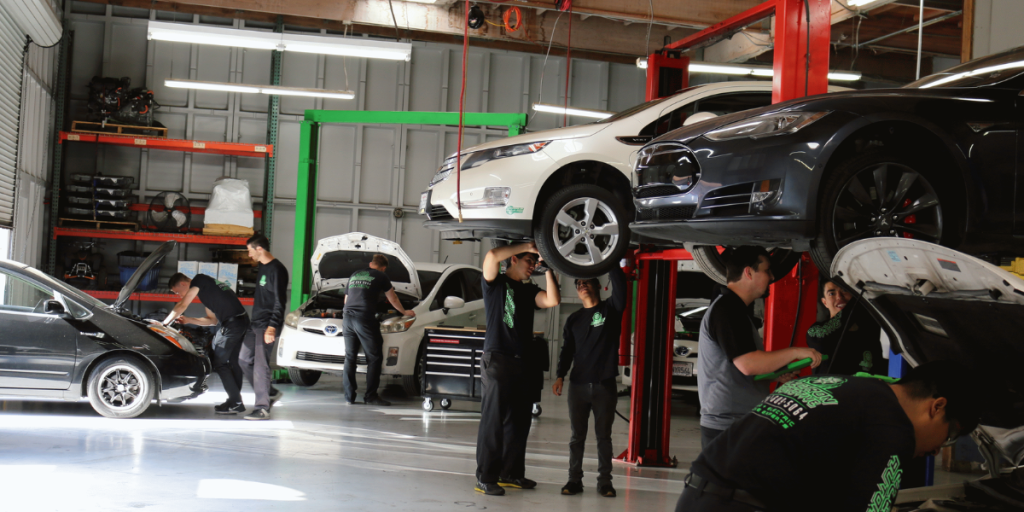
While auto repair is inherently a dirty job involving grease and oil, the customer areas and the organization of the service bays speak volumes about the management style. A disorganized, chaotic shop often translates into disorganized, careless work on your vehicle.
Take a close look at the waiting area, restrooms, and visible service bays. A clean, well-lit waiting room indicates that the business values customer comfort. In the garage area, tools should be stored properly, floors should be free of major fluid spills, and the overall environment should look efficient. If a shop ignores its own property, it may treat your vehicle with the same lack of care.
4. Ask About Warranties and Guarantees
Reputable mechanics stand behind their labor and the parts they install. Before authorizing any work, ask the service advisor about the warranty policy.
A standard benchmark for quality independent auto repair is a warranty of twelve months or twelve thousand miles, whichever comes first. Many premium shops offer even better protection, such as twenty-four months or twenty-four thousand miles. Furthermore, ask if the warranty is nationwide. If you travel frequently or move to another state, a nationwide warranty network ensures you can get a defective part replaced without paying a second time. If a shop offers no warranty or only covers the vehicle until it rolls off their lot, find another business.
5. Analyze Communication and Digital Inspections
The days of a mechanic scribbling an illegible note on a greasy piece of paper are largely gone. Modern, reliable auto shops utilize digital vehicle inspections to provide total transparency.
High-quality service centers will send a comprehensive digital report directly to your smartphone via text or email. This report often includes color-coded health statuses for different systems, along with actual photographs and videos of the parts that require attention. Seeing a picture of your worn brake pads or a leaking fluid line builds immense trust and eliminates any suspicion that the shop is inventing problems.
Additionally, pay attention to how the service advisor explains the issues. They should be able to break down complex mechanical concepts into plain English without resorting to high-pressure sales tactics or confusing jargon.
6. Research Reviews Beyond the Overall Score
Online reviews are incredibly valuable, but you must know how to read them correctly. Do not simply look at the overall star rating on Google or Yelp; instead, dive deeper into the actual comments left by customers.
-
Look for Consistency: Pay attention to patterns. If multiple reviews mention that the shop finished the work on time and stuck to the initial estimate, that is an excellent sign. Conversely, if multiple reviews complain about unexpected fees or having to return for the same issue, proceed with caution.
-
Observe Management Responses: How does the business owner respond to negative feedback? A shop owner who responds calmly, professionally, and offers to make things right demonstrates high accountability. Avoid shops that attack critical reviewers or refuse to acknowledge mistakes.
Key Questions to Ask Before Dropping Off Your Car
| Question to Ask | Why It Matters | Ideal Answer |
| Do you provide written estimates? | Prevents unexpected price hikes upon pickup. | Yes, we provide full breakdowns before work begins. |
| Can I keep or see my old parts? | Proves that the repair was actually necessary and completed. | Absolutely, we can show you the old parts upon request. |
| Do you charge a diagnostic fee? | Clarifies the baseline cost just to find the problem. | Yes, a flat fee that covers the technician’s testing time. |
| What parts do you use? | Ensures you are getting durable components. | Original Equipment or high-quality aftermarket equivalents. |
| Will you notify me before doing extra work? | Keeps you in control of your budget. | We never perform unauthorized work without explicit consent. |
Frequently Asked Questions
Is an independent auto repair shop better than a dealership service department?
Neither option is universally superior, as both have distinct advantages. Dealerships specialize heavily in your specific make, use original factory parts, and handle recall work or factory warranties seamlessly. Independent shops, however, are usually more affordable, offer a more personalized customer experience, and can service multiple vehicle makes within the same household.
Why do diagnostic fees vary so much between different auto shops?
Diagnostic fees reflect the time, expertise, and expensive scanning equipment required to pinpoint an issue. A complex electrical problem or an intermittent engine stall cannot be accurately diagnosed simply by plugging in a code reader. The fee covers the technician’s specialized labor to track down the root cause so you do not waste money replacing working parts.
Can a shop charge me more than the initial written estimate?
In many states, consumer protection laws strictly regulate this practice. Generally, an auto shop cannot exceed the written estimate by more than ten percent without obtaining your direct verbal or written approval first. Always ask about local regulations and ensure the shop promises to call you if the scope of the repair expands.
What should I do if a repair fails shortly after leaving the shop?
Contact the shop immediately and describe the symptoms calmly. Reputable shops prioritize warranty comebacks and will want to diagnose the failure to see if a part was defective or if an installation error occurred. Give the business a fair opportunity to rectify the situation before leaving a negative review or seeking legal recourse.
What is the difference between OEM parts and aftermarket parts?
Original Equipment Manufacturer parts are produced by the vehicle maker and are identical to the components installed at the factory. Aftermarket parts are produced by third-party companies. While some aftermarket parts are cheap and inferior, many are engineered to meet or exceed original factory specifications at a significantly lower cost.
Can I bring my own parts to an auto shop to save money on labor?
Most professional auto repair shops do not allow customers to supply their own parts. Businesses rely on the markup of parts to remain profitable, ensure the component is the correct fitment, and offer a warranty on the repair. If a customer-supplied part fails, the shop cannot cover the labor to replace it, creating a liability nightmare for both parties.
How can I verify if an auto shop is legally licensed and insured?
You can verify a business’s standing by checking with your local Bureau of Automotive Repair, the state Department of Consumer Affairs, or the Better Business Bureau. A legitimate shop will always display its business license and motor vehicle repair dealer registration in the customer service area as required by local law.