
How Artificial Intelligence Is Revolutionizing Automotive Design
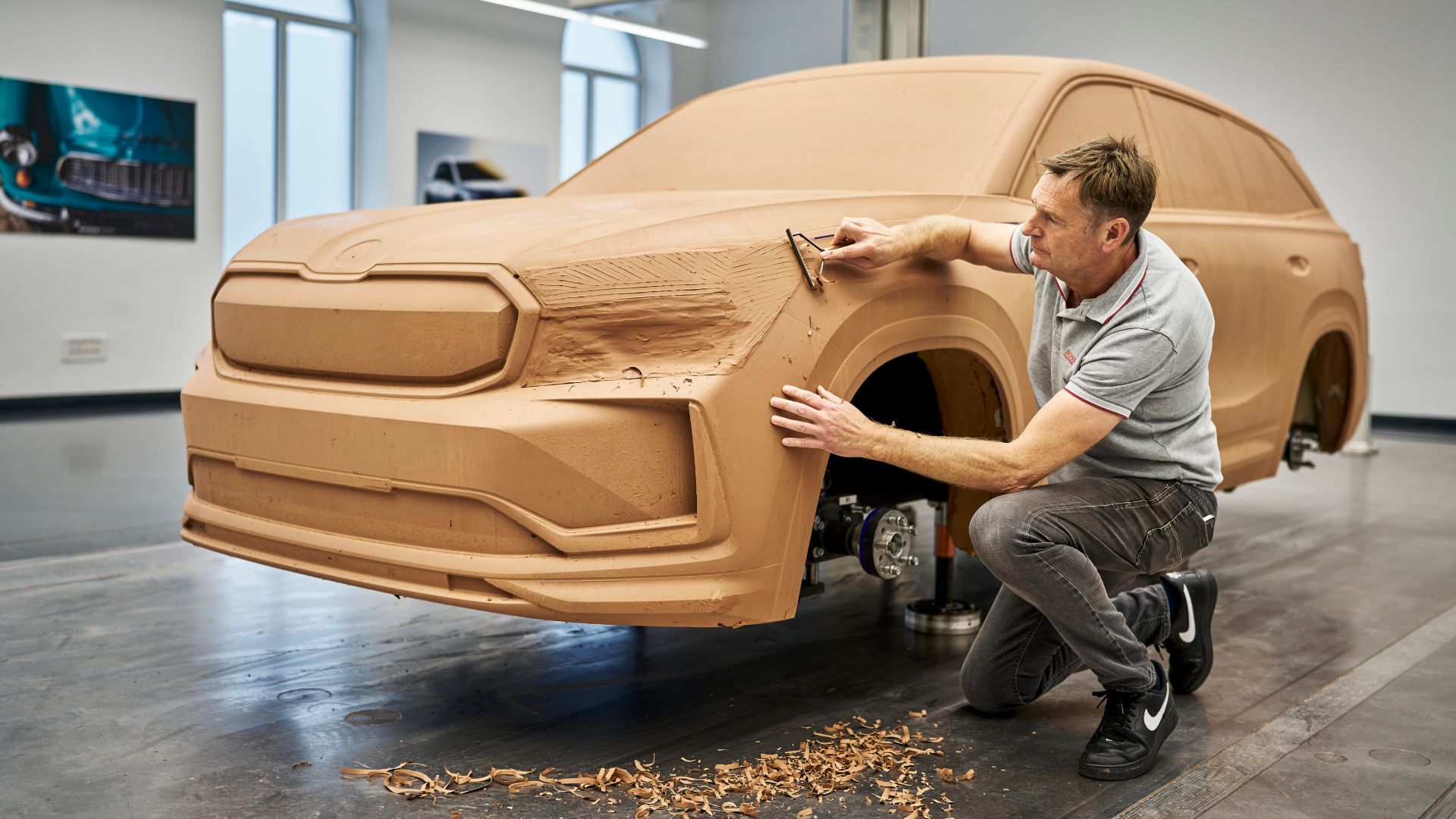
The process of designing a new automobile has historically been a labor-intensive, multi-year journey. It traditionally began with artists sketching concepts on paper, advanced to physical clay modelers shaping full-scale vehicles by hand, and concluded with teams of engineers spending months running computer simulations to ensure structural integrity. Today, this century-old workflow is undergoing a monumental disruption driven by artificial intelligence.
Artificial intelligence is no longer confined to autonomous driving systems or predictive maintenance algorithms. It has moved upstream into the design studios and engineering bays of major automakers. By analyzing massive datasets, predicting complex physics, and generating thousands of design variations in seconds, machine learning algorithms are enabling car companies to build safer, more efficient, and more visually striking vehicles in a fraction of the traditional time.
Generative Design and Structural Optimization
One of the most profound applications of artificial intelligence in vehicle development is generative design. Traditional design relies on human intuition and existing engineering paradigms to create a component. Generative design reverses this approach by allowing the designer to input specific parameters while letting an intelligence algorithm discover the optimal form.
Biomimicry and Weight Reduction
When an engineer utilizes generative design software, they specify the constraints of a part, such as maximum dimensions, attachment points, expected load forces, and material types. The software then processes thousands of structural permutations, adding material only where stress is highest and removing it where it is not needed.
The resulting components often look biological, resembling organic structures like bones or tree roots rather than traditional geometric machine parts. These artificial intelligence-optimized parts are significantly lighter than their human-designed counterparts while maintaining or even exceeding the original structural strength. In an industry where reducing weight directly translates to increased fuel efficiency for gas cars and longer driving ranges for electric vehicles, this structural optimization is invaluable.
Consolidating Complex Assemblies
Generative design also allows automakers to consolidate complex, multi-piece assemblies into single, continuous components. For example, an engine bracket or a seat frame section that previously required welding together a dozen separate stamped metal sheets can now be generated as a single, optimized piece suitable for advanced 3D printing or high-pressure casting. This reduces manufacturing complexity, lowers vehicle assembly costs, and eliminates points of failure.
Accelerating Aerodynamics and Virtual Wind Tunnels
Aerodynamics plays a vital role in modern vehicle design. A car with a low drag coefficient cuts through the air effortlessly, drastically reducing energy consumption and wind noise inside the cabin. Traditionally, testing a car’s aerodynamics required building expensive physical prototypes and placing them inside massive wind tunnels, a process that cost millions of dollars and took weeks for every minor iteration.
Instantaneous Computational Fluid Dynamics
While engineers have used Computational Fluid Dynamics (CFD) software for years to simulate airflow digitally, these programs require immense computing power and can take hours or days to process a single vehicle shape. Artificial intelligence neural networks have completely bypassed this bottleneck.
By training an algorithm on thousands of previous wind tunnel tests and traditional CFD simulations, the system learns to predict airflow behavior instantaneously. Designers can manipulate the digital 3D surface of a vehicle body in real-time, and the intelligence software immediately displays how the modification alters the drag coefficient. This allows for rapid, fluid experimentation that was completely impossible under old engineering constraints.
Enhancing Vehicle Safety Through Predictive Crash Simulation
Passenger safety is the absolute highest priority in automotive design. Vehicles must feature carefully calibrated crumple zones that absorb kinetic energy during a collision, deflecting the forces away from the passenger cabin.
-
Simulating Millions of Variables: Traditional digital crash testing requires immense computing power and hours of processing time to simulate a single impact scenario. Artificial intelligence systems can analyze how different steel alloys, aluminum grades, and geometric shapes behave under stress almost instantly.
-
Predicting Unforeseen Multi-Angle Collisions: Machine learning algorithms can run millions of virtual crash permutations simultaneously, adjusting variables such as impact angle, vehicle speed, occupant weight, and collision objects. This allows engineers to identify hidden structural vulnerabilities and reinforce specific areas of the chassis long before a physical prototype is ever built for real-world crash testing.
Transforming the Aesthetics and Interior Experience
Beyond the mechanical underneath of a vehicle, artificial intelligence is leaving its mark on the visual styling and cabin layout of modern cars.
Creative Ideation and Mood Boards
In the earliest phases of design, automotive stylists use generative image models to break through creative blocks. By inputting descriptive prompts regarding a brand’s heritage, target demographics, and futuristic design philosophies, designers can generate hundreds of high-fidelity conceptual mood boards in minutes. While these images are rarely copied directly, they serve as powerful catalysts for human artists, sparking unique ideas for headlight signatures, rooflines, and wheel designs.
Ergonomics and User Experience Architecture
Designing a vehicle interior requires balancing physical comfort, control accessibility, and digital screen placement. Artificial intelligence algorithms analyze human ergonomic data across vast demographic ranges. The software can simulate how drivers of varying heights, arm lengths, and posture preferences will interact with the dashboard, ensuring that touchscreens are within easy reach and critical sightlines remain completely unobstructed.
Furthermore, inside the cabin, developers use predictive models to design intuitive user interfaces. By analyzing how drivers navigate menus, the system places the most frequently used functions in prominent, easily accessible locations, minimizing driver distraction.
Streamlining Global Collaboration and Supply Chains
Modern automotive corporations operate design studios and engineering centers spread across multiple continents. Artificial intelligence serves as a bridge, synthesizing work across these disparate teams. Machine learning translation models and asset management systems ensure that engineering modifications made in Germany are instantly reconciled with styling changes occurring in California or manufacturing constraints identified in an assembly plant in Japan. This seamless data synchronization prevents design conflicts, eliminates redundant workflows, and ensures a cohesive final product.
Frequently Asked Questions
Does artificial intelligence mean that human car designers will become obsolete?
No. Artificial intelligence is a highly sophisticated tool that augments human creativity and engineering rather than replacing it. While the software can generate variations, optimize structures, and predict physics, it lacks emotional intuition, brand understanding, and a true appreciation for human aesthetic tastes. Human designers still provide the overarching vision, artistic direction, and final decision-making power.
How does artificial intelligence help in designing electric vehicle battery packs?
Battery packs are incredibly heavy and generate significant heat during rapid charging and acceleration. Artificial intelligence algorithms help designers arrange the internal cells to maximize energy density while optimizing the integrated liquid cooling channels. This ensures uniform heat dissipation and protects the pack from thermal runaway while keeping the overall enclosure as lightweight as possible.
Can artificial intelligence predict how materials will age over a decade of use?
Yes. Machine learning models can be trained on historical data regarding material degradation, rust patterns, UV exposure damage, and mechanical wear. By analyzing this data, the software can predict how a new bio-plastic interior trim or a specific aluminum alloy chassis component will hold up after ten years of exposure to harsh winters, intense sunlight, and daily vibrations.
How does artificial intelligence-driven design lower the retail cost of a new car?
By significantly reducing the time spent on physical prototyping, wind tunnel testing, and manual engineering adjustments, automakers can save hundreds of millions of dollars in the development phase. Additionally, generative design optimizes material usage and reduces part counts, lowering manufacturing costs, which can then be passed down to the consumer as a lower retail price.
What role does artificial intelligence play in designing acoustic comfort inside a car?
Vehicle cabins are subject to complex noise, vibration, and harshness (NVH) factors from the road, wind, and tires. Artificial intelligence acoustic models analyze how sound waves bounce off different interior geometries and materials. This allows designers to strategically place sound-dampening materials and adjust the curvature of glass and body panels to create a much quieter, more serene cabin environment.
How does artificial intelligence assist in designing vehicles for easier recycling?
Automakers are using machine learning systems to audit their designs for end-of-life recycling efficiency. The software evaluates how components are fastened together and suggests modifications that allow future robotic dismantling facilities to easily separate different materials, such as separating copper wiring from steel frames, ensuring maximum material recovery when the vehicle is eventually retired.